
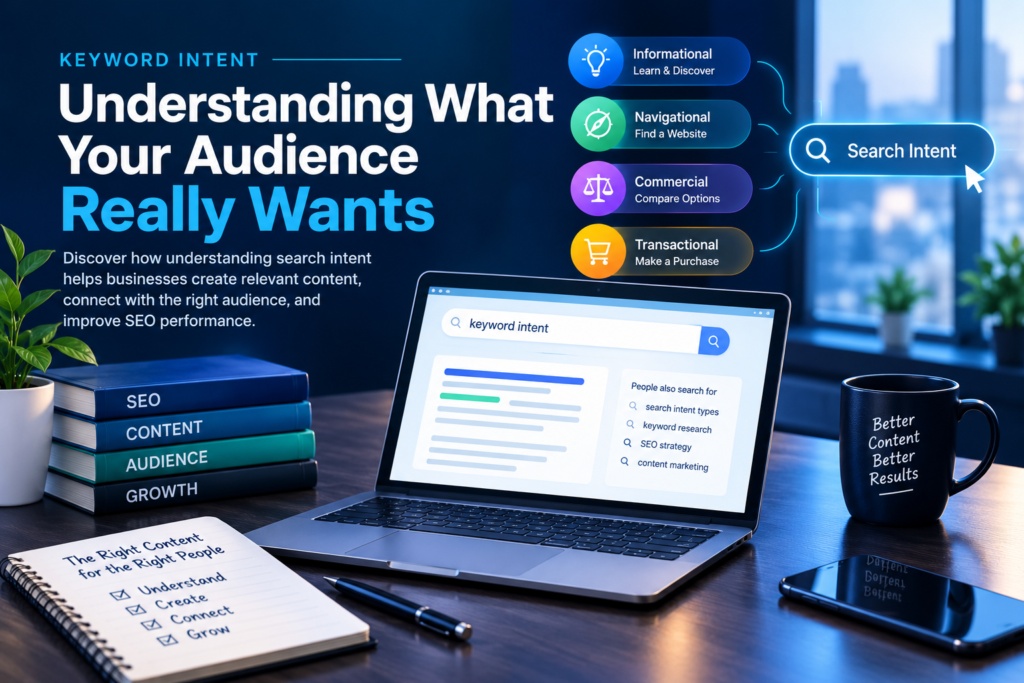
KEYWORD INTENT: UNDERSTANDING WHAT YOUR AUDIENCE REALLY WANTS.
Introduction
In the world of digital marketing, understanding what people search for online is just as important as knowing which keywords they use. Every day, millions of people search on Google to find information, compare products, solve problems, and make purchasing decisions. However, behind every search query, there is a specific purpose or need. This purpose is known as keyword intent or search intent.
Understanding keyword intent helps businesses create relevant content that matches the needs of their target audience. Instead of simply adding popular keywords to a website, marketers can develop content that answers questions, provides solutions, and guides potential customers toward the right decisions. When content matches what users are looking for, it can improve user experience, increase website engagement, and support better SEO performance.
In this article, we will explore keyword intent, its different types, its importance in SEO, and how businesses can use it to attract the right audience.
What Is Keyword Intent?
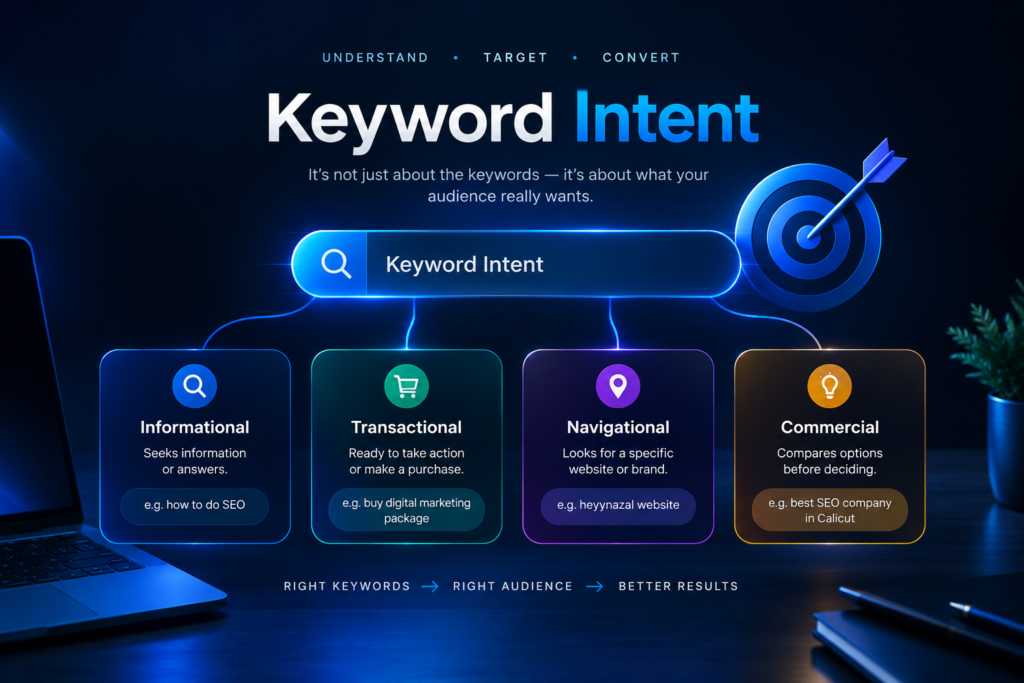
Keyword intent refers to the reason behind a user’s search query. It explains what a person expects to find when they enter specific words or phrases into a search engine.
For example, someone searching for “what is SEO” is probably looking for information about search engine optimization. Meanwhile, a person searching for “best SEO agency in Calicut” may be comparing service providers before making a decision.
Although both searches relate to SEO, their purposes are different. The first user wants to learn, while the second may be interested in hiring a professional.
Search intent helps digital marketers understand these differences and create content that meets users’ expectations. By focusing on the purpose behind searches, businesses can attract visitors who are more likely to engage with their content and take meaningful action.
The Four Main Types of Search Intent
1. Informational Intent
Informational intent occurs when users want to learn something, find an answer, or understand a particular topic. They are usually searching for knowledge rather than trying to purchase a product immediately.
Examples include:
- What is search engine optimization?
- How does social media marketing work?
- Ways to improve website traffic?
- How to create a content calendar?
To target informational intent, businesses can create blog posts, educational articles, tutorials, guides, and frequently asked questions. These content formats help users understand a topic while establishing the business as a useful and trustworthy source of information.
For example, a digital marketing website can publish an article explaining how keyword research improves SEO. This content may attract beginners, business owners, and marketing professionals who want to improve their knowledge.
2. Navigational Intent.
Navigational intent occurs when users want to find a specific website, business, or online platform. They already have a destination in mind and use a search engine to reach it.
Example include:
- Google Analytics login
- Instagram website
- Ahrefs official website
- heyy nazal digital marketing website
How marketers can use it:
Businesses can support navigational searches by maintaining a recognizable brand name, optimizing their website structure, and ensuring that important pages are easy to find.
A clear website name, relevant page titles, and an organized navigation menu can help users reach the information they need without unnecessary confusion.
3. Commercial Investigation Intent.
Commercial investigation intent occurs when users research and compare products or services before making a purchase. They are interested in a solution but may need more information before deciding.
Examples include:
- Best SEO tools for small businesses.
- Best digital marketing services in Calicut.
- Google Ads vs organic marketing.
How marketers can use it:
This type of intent is especially valuable for businesses because users may be approaching the decision-making stage.
To target commercial investigation searches, marketers can create comparison articles, service guides, case studies, reviews, and detailed explanations of the benefits of their offerings.
For example, an article comparing Google Ads with organic SEO can help business owners understand the differences between paid and organic marketing. By presenting accurate information and practical examples, a business can help readers choose the solution that suits their goals.
4. Transactional Intent
Transactional intent occurs when users are ready to take a specific action, such as purchasing a product, booking a service, or signing up for a program.
Examples include:
- Hire an SEO expert.
- Buy SEO Software.
- Book a digital marketing consultation.
- Sign up for a Google Ads course.
How marketers can use it:
Users with transactional intent often need clear information about pricing, service benefits, availability, and the next steps.
Businesses can target these searches with optimized service pages, product pages, booking pages, and clear calls to action. Phrases such as “Book a Consultation,” “Get a Quote,” and “Start Your Project” can make it easier for potential customers to take the next step.
Why Is Keyword Intent Important for SEO?
Keyword intent plays a significant role in helping businesses create content that meets users’ needs. Search engines aim to provide results that are relevant and useful for each search query. Therefore, understanding the purpose behind keywords can help marketers develop a more effective SEO strategy.
Here are four major benefits:
1. Improves content relevance: When content directly answers a user’s question, it becomes more useful. Relevant content helps visitors find information without searching through unrelated material.
Understanding search intent helps marketers produce articles, landing pages, and guides that answer the questions users actually have. Relevant content improves the overall usefulness of a website.
2. Attracts the Right Audience: Targeting keywords based on intent helps businesses reach people who are interested in their products, services, or expertise. This can bring more relevant visitors to a website.
Not every website visitor is ready to purchase. By targeting different types of intent, businesses can attract people who are learning, comparing solutions, or looking for a service.
3. Supports better user experience: Visitors are more likely to stay engaged when a webpage provides the information they expected. Clear headings, useful explanations, and easy navigation make content more accessible.
When visitors quickly find the information they need, they can navigate the website more easily. Clear structure, helpful information, and relevant links make the experience more satisfying.
4. Helps improve conversion opportunities: When businesses understand where users are in the buying journey, they can provide appropriate content and calls to action. Informational content can build awareness, while service pages can encourage enquiries and bookings.
5 .Strengthens content planning : Search intent helps marketers decide whether a keyword should be targeted with a blog post, landing page, comparison article, or service page. This creates a more organized content strategy.
How to Identify Keyword Intent.
Identifying keyword intent requires more than examining search volume. Marketers need to understand what users expect to see when they search for a particular phrase.
Step 1: Analyze Search Engine Results Pages.
One of the simplest ways to identify search intent is to search for a keyword on Google and examine the results. Observe whether the top-ranking pages are blog posts, product pages, service pages, videos, or comparison article
For example, if most results for a keyword are educational blog posts, users probably want to learn about the topic. If the results mainly feature service providers, the keyword may have commercial or transactional intent.
Step 2: Use Keyword Research Tools
Tools such as Google Keyword Planner, Ahrefs, and Uber suggest can help marketers discover keyword ideas, evaluate search demand, and identify opportunities.
These tools provide useful data for planning content, but search intent should also be evaluated by examining the actual search results and understanding the audience’s needs.
Step 3: Understand Your Target Audience
Knowing your audience is essential for understanding why people search for particular terms. Consider their challenges, questions, goals, interests, and stage in the buying journey.
For example, a beginner may search for “what is social media marketing,” while a business owner may search for “social media marketing services for small businesses.” These searches indicate different needs and require different content approaches.
Step 4: Group Keywords by Intent
Organize related keywords according to their purpose. Informational keywords can support educational blog content, while commercial keywords may be suitable for comparison pages. Transactional keywords can be targeted through service pages and conversion-focused landing pages.
Common Mistakes to Avoid.
Even experienced marketers can make mistakes when working with keyword intent. One common mistake is focusing only on search volume instead of considering whether a keyword attracts the right audience. A keyword with high search volume may generate traffic without producing meaningful business results.
Another mistake is using the same type of content for every keyword. An educational search requires a different approach from a search made by someone ready to hire a service provider.
Keyword stuffing is also harmful to content quality. Repeating keywords unnaturally can make articles difficult to read. Instead, marketers should use keywords naturally, provide useful information, and maintain a clear structure.
Finally, businesses should regularly review their content performance. Search behavior and user expectations can change, so updating articles and improving pages when necessary can help maintain their relevance.
Conclusion.
Keyword intent is an essential part of a successful SEO strategy because it helps businesses understand what their audience really wants. By identifying whether users want information, a specific website, a comparison, or a product or service, marketers can create content that matches their needs.
From researching keywords and analyzing search results to developing relevant blog posts and optimizing service pages, every step should focus on delivering value to the user. The goal is not simply to attract more website visitors but to connect with people who are genuinely interested in the information or solutions a business provides.
When you understand the intent behind a search, you can create content that answers the right questions, builds trust, and supports long-term digital growth. In a competitive online environment, understanding your audience is one of the most valuable steps toward improving SEO performance and building stronger relationships with potential customers.